
Showing posts with label diagnosis. Show all posts
Showing posts with label diagnosis. Show all posts
Wednesday, August 4, 2010
Monday, March 30, 2009
Cushing's Syndrome in Women With Polycystic Ovaries and Hyperandrogenism
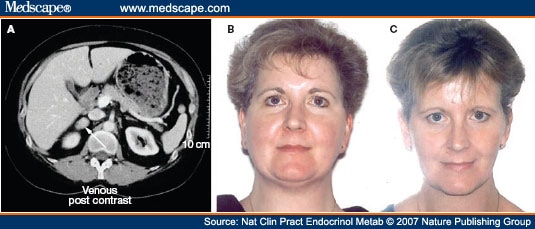
Cushing's Syndrome in Women With Polycystic Ovaries and Hyperandrogenism continues the theme of how to distinguish between PCOS and Cushing's. Above is a picture of a woman who was diagnosed as having PCOS. 7 years later, she was re-tested and found to have Cushing's Syndrome instead.
Cushing's patients are frequently misdiagnosed with PCOS. It is an easy diagnosis (in layman's terms) and avoids the multiple tests and confusion which suspicion of Cushing's seems to bring. This article talks about the aforementioned case and 3 others where Cushing's was misdiagnosed as PCOS. Once treated for the Cushing's, all symptoms which had been attributed to PCOS resolved.
The authors make the case for "the diagnosis of PCOS only when other etiologies have been excluded." They also contend " economic pressures drive health care to be delivered within fewer consultation sessions outside of specialist centers [making it] pertinent to emphasize that not all cases of hyperandrogenism or ovarian cysts are related to PCOS and that curable causes, such as Cushing's syndrome, must be excluded by careful history taking, examination and (potentially repeated) investigation."
And, as a sidenote, the authors mention screening patients who have type 2 diabetes. According to them, "Recent data obtained by screening individuals with type 2 diabetes suggest that cortisol excess, widely considered a rare endocrinopathy in the form of classical Cushing's syndrome, is in fact more common than supposed. "


Saturday, March 28, 2009
Diagnosing and Treating Cushing's: Presentations by Dr. Theodore C. (Ted) Friedman
Dr. Friedman's original PowerPoints may be found at his website. These are very informative and easy to follow.
Saturday, March 14, 2009
The Blunting of Occam's Blade: Why diagnosis is less important in endocrinology in the 21st century

During the second BlogTalkRadio interview of Dr. Theodore (Ted) F. Friedman, he talked about something he had written. He gave me permission to share it:
With permission from Dr. Friedman:
In the 14th century, William of Occam stated, "Plurality must not be posited without necessity." This led to the concept populated by the famous internist, William Osler, who posited that each patient should have one disease, and that disease can explain all the patient's symptoms. In medical school, young physicians learn this philosophy and continue that philospophy throughout their medical career. They often look for a single, unifying diagnosis in each patient and expect that all the patient's problems are related to this single diagnosis. When that diagnosis is treated with a standard treatment, the problems should go away. Dr. Friedman feels this philosophy of Occam's Blade is detrimental to modern medicine, especially endocrinology.
Patients are becoming increasingly complex and have multiple subtypes. It is important to distinguish between the subtypes, as that may alter treatment. Additionally, not all patients with a single disease present similarly. For example, patients with Cushing's syndrome may manifest diverse symptoms including weight gain, trouble sleeping, severe fatigue, decreased libido, high blood pressure, and diabetes, but most patients with Cushing's syndrome do not have all of these conditions and they only have a few of them. Many physicians only know about Cushing’s syndrome from a picture of a severe Cushing’s syndrome they see in a textbook and may say to a patient that they don’t have Cushing's syndrome, because they lack one or more signs from that textbook case. Therefore, it is important not to lump everyone together with a diagnosis of Cushing's syndrome but rather to recognize that there may be different subtypes. This is especially important in the field of diabetes, which can be due to problems such as insulin resistance, lack of insulin production, inflammation, or problems with glucose disposal. Currently in diabetes, all patients are treated with similar medicines regarding of their etiology of diabetes. Dr. Friedman expects this to change in the near future, and subtyping patients will become standard of care. Additionally, recognizing that patients with a single disease may have different manifestations of that disease is becoming more prevalent.
While Dr. Friedman does like to try to provide a diagnosis to the patient, but sometimes it is more important to recognize a symptom complex that can be treated with different medications. Many diseases, such as polycystic ovarian syndrome (PCOS), are really grab-bags of different symptoms put together. Therefore, diagnosing someone with PCOS just means that other causes of the symptom complex of weight gain, extra hair growth and irregular periods, have been excluded. Dr. Friedman does not find it particularly useful to give someone a diagnosis of PCOS but rather to treat those initial symptoms and find out whether they are due to a laboratory value such as high testosterone that can be corrected with medications.
Hopefully Occam's Blade will be put to rest and more symptom- and laboratory-based specific treatments will come to the forefront of endocrinology in the future.
With permission from Dr. Friedman:
In the 14th century, William of Occam stated, "Plurality must not be posited without necessity." This led to the concept populated by the famous internist, William Osler, who posited that each patient should have one disease, and that disease can explain all the patient's symptoms. In medical school, young physicians learn this philosophy and continue that philospophy throughout their medical career. They often look for a single, unifying diagnosis in each patient and expect that all the patient's problems are related to this single diagnosis. When that diagnosis is treated with a standard treatment, the problems should go away. Dr. Friedman feels this philosophy of Occam's Blade is detrimental to modern medicine, especially endocrinology.
Patients are becoming increasingly complex and have multiple subtypes. It is important to distinguish between the subtypes, as that may alter treatment. Additionally, not all patients with a single disease present similarly. For example, patients with Cushing's syndrome may manifest diverse symptoms including weight gain, trouble sleeping, severe fatigue, decreased libido, high blood pressure, and diabetes, but most patients with Cushing's syndrome do not have all of these conditions and they only have a few of them. Many physicians only know about Cushing’s syndrome from a picture of a severe Cushing’s syndrome they see in a textbook and may say to a patient that they don’t have Cushing's syndrome, because they lack one or more signs from that textbook case. Therefore, it is important not to lump everyone together with a diagnosis of Cushing's syndrome but rather to recognize that there may be different subtypes. This is especially important in the field of diabetes, which can be due to problems such as insulin resistance, lack of insulin production, inflammation, or problems with glucose disposal. Currently in diabetes, all patients are treated with similar medicines regarding of their etiology of diabetes. Dr. Friedman expects this to change in the near future, and subtyping patients will become standard of care. Additionally, recognizing that patients with a single disease may have different manifestations of that disease is becoming more prevalent.
While Dr. Friedman does like to try to provide a diagnosis to the patient, but sometimes it is more important to recognize a symptom complex that can be treated with different medications. Many diseases, such as polycystic ovarian syndrome (PCOS), are really grab-bags of different symptoms put together. Therefore, diagnosing someone with PCOS just means that other causes of the symptom complex of weight gain, extra hair growth and irregular periods, have been excluded. Dr. Friedman does not find it particularly useful to give someone a diagnosis of PCOS but rather to treat those initial symptoms and find out whether they are due to a laboratory value such as high testosterone that can be corrected with medications.
Hopefully Occam's Blade will be put to rest and more symptom- and laboratory-based specific treatments will come to the forefront of endocrinology in the future.
Saturday, February 14, 2009
Amazing Kimberly: A video tracing her journey with Cushing's Syndrome
"For five years the doctors found nothing wrong"
On her blog, Cushing's and Cancer, MaryO shares the story of Kimberly, a Cushing's Syndrome survivor. She says:
On the YouTube site Kimberly's husband, Randal, says:
The amazing story of Kimberly, whose health began to deteriorate in 1999. A number of unrelated symptoms, including substantial weight gain and fatigue, baffled doctors for over 5 years. She was finally diagnosed with Cushings syndrome in 2005. This video shows her miraculous transition battling through this disease, regaining her health and beauty.
Kimberly, you go, girlfriend!!! Randal, thank you for sharing. I hope this will help others to be diagnosed sooner and easier.
On her blog, Cushing's and Cancer, MaryO shares the story of Kimberly, a Cushing's Syndrome survivor. She says:
This video was kindly sent to me by Kimberly's husband. He did such a beautiful job putting her images into a video with music. This is another great way to help get the word out about Cushing's. Thanks, Randall!
On the YouTube site Kimberly's husband, Randal, says:
The amazing story of Kimberly, whose health began to deteriorate in 1999. A number of unrelated symptoms, including substantial weight gain and fatigue, baffled doctors for over 5 years. She was finally diagnosed with Cushings syndrome in 2005. This video shows her miraculous transition battling through this disease, regaining her health and beauty.
Kimberly, you go, girlfriend!!! Randal, thank you for sharing. I hope this will help others to be diagnosed sooner and easier.
Sunday, December 7, 2008
'The girl who couldn't wake up'-- 5 years of misdiagnosis

"For five years, beginning in 1999 at age 16, Jenkins complained of fatigue, nausea, dizziness, memory loss and severe headaches. She frequently fainted. All she wanted to do was sleep."
A must-read article, 'The girl who couldn't wake up', details the events after Jennifer Julian Jenkins was in a wreck which caused the pituitary to be separated from its stalk (infundibulum). She was misdiagnosed and mistreated for 5 long years.
In addition to the flu, Jenkins was diagnosed with anemia, gastroenteritis and a viral infection. A psychiatrist said there was nothing medically wrong with Jenkins, she was depressed and lazy...
..."At one point, my parents talked about putting me in a mental institution because no matter how hard they tried, nobody could find anything wrong. And the thought of being institutionalized really didn't bother me. All I could think about was, 'At least there, I could sleep without anyone disturbing me.' "
Once a doctor took the time to do two simple tests for cortisol and thyroid, the problem became clear: hypopituitarism. When asked why it took so long for doctors to test and treat her appropriately, Jennifer says, "I hope some of the doctors I saw read this. I hope they slow down, listen to their patients a little more and take the time to figure out what is wrong instead of just chalking everything up to age or depression."
To read more, click here. A sound bite is included.
Jennifer's story will air on Discovery Health's Mystery Diagnosis December 15. Check your local listings for the time.
UPDATE: The story isn't at the link anymore, but here it is from the Clarion Ledger in full:
Charlie Julian raced up the stairs of the family's Brandon home and into his sister's bedroom, where he found her asleep and unresponsive.
He yelled for her to wake up and gently, but firmly, slapped her face.
"That's when I would just burst out laughing," says Jennifer Julian Jenkins, 25, recalling a day last May when she and her brother reenacted a real-life scene for The Discovery Channel's Mystery Diagnosis series, which will air Dec. 15. "We must've tried it a dozen times and every time he would slap me, I couldn't keep from laughing.
"They finally said, 'Let's just skip the slapping part.' "
It wasn't a laughing matter four years earlier. After being rushed to the hospital, Jenkins' body temperature was a frigid 94.3, her blood pressure a dangerously low 76/61.
Numerous tests were conducted. The best guess doctors could offer: Jenkins was suffering from a severe case of the flu.
For five years, beginning in 1999 at age 16, Jenkins complained of fatigue, nausea, dizziness, memory loss and severe headaches. She frequently fainted. All she wanted to do was sleep.
And she went back in time. Instead of going out with her friends from Brandon High School, Jenkins was content to stay home and play with Barbie dolls.
In addition to the flu, Jenkins was diagnosed with anemia, gastroenteritis and a viral infection. A psychiatrist said there was nothing medically wrong with Jenkins, she was depressed and lazy.
"And I began to believe them," Jenkins says. "To me, I had become this awful, worthless person.
"At one point, my parents talked about putting me in a mental institution because no matter how hard they tried, nobody could find anything wrong. And the thought of being institutionalized really didn't bother me. All I could think about was, 'At least there, I could sleep without anyone disturbing me.' "
Finally in March 2004, after visiting more than 20 specialists and nearly losing her life, two Jackson physicians - Albert Steele and Robert Evans - correctly pinpointed Jenkins' problem. Jenkins was suffering from hypopituitarism. In plain terms, her pituitary gland - located at the base of the brain - had stopped supplying her body with sufficient amounts of hormones.
"For five years, we watched our daughter become someone we barely recognized," says her mother, Marilyn Julian. "And I was treated by most doctors as some micro-managing mother who needed to get out of the way and quit bringing her to see them."
*
On June 7, 1999, Jenkins and her mother were driving home from Columbia after visiting Jenkins' grandmother, who was battling cancer.
Jenkins was driving her mother's new Honda Accord and traveling the speed limit, 65 miles per hour, along U.S. 49 when a car pulled from the shoulder of the median into Jenkins' path.
Upon impact, both cars began to spin. The driver's side of the Honda was struck twice by the other car. Jenkins was knocked unconscious. Her mother suffered two broken ribs. The other driver, a teenage boy in his aunt's car, was not injured.
Jenkins opened her eyes shortly after the ambulance arrived. "I remember hearing my mother screaming for me to wake up, and I had a lot of pain in my neck," she says.
They were treated and released from Simpson General Hospital in Mendenhall. Jenkins and her mother were sore for several weeks but appeared to recover with no complications.
Four months later, Jenkins had her first fainting spell. Jenkins' pediatrician ordered tests of her brain and heart. "When the results came back, the doctor didn't seem too concerned," she says.
Her frustrating medical journey had begun.
A month later, the day before Thanksgiving, Jenkins appeared to be having a stroke. Her speech was slurred. Her mouth drooped on one side. She was admitted to the University of Mississippi Medical Center in Jackson and diagnosed with complex migraines.
"I'd have at least one migraine every month," Jenkins says. "They would put me out for a day or two."
"If Jennifer got a cold, it turned into a major ordeal," Marilyn says. "If she got a stomach bug, she would have to be hospitalized for it. I work at Brandon High School (as choral director and a health teacher). I'm around teenagers all the time. Stomach bugs usually don't put them in the hospital."
Jenkins says her senior year "is a blur ... I see the pictures of my graduation, but I really don't remember it."
Her grades slipped. When she took the ACT again, hoping to improve on the 21 she made as a sophomore, she scored an 18.
She flunked out of Belhaven College her freshman year "because I couldn't stay awake long enough to go to class.
"And my parents didn't know what to think. So we had a big pow-wow. You know, 'You've got to do better. You're sleeping your life away.' But in their defense, they had tried everything and I couldn't even keep a job."
She was so fatigued, Jenkins went into one of the dressing rooms at a department store where she worked and went to sleep. When co-workers came banging on the door, she tried to disguise her voice, hoping they would go away and let her rest.
"Jennifer told me recently that she would tell us anything we wanted to hear back then so we would leave her alone and let her sleep," Marilyn says. "I think about it now, what it must have been like for her."
*
It was Feb. 16, 2004, when Charlie found his sister near death in her bedroom.
"I had an Algebra test that day (at Hinds Community College) and my mom kept calling me, making sure I was awake," Jenkins recalls. "After the third time, I just quit answering."
Marilyn sent Charlie over to check on her.
"I think we all wonder what would have happened if Charlie hadn't been home studying for the Bar exam," Jenkins says.
On a whim, Jenkins' dad - Charles Julian - made an appointment for her to see his internal medicine specialist, Albert Steele.
"Dr. Steele listened to what had been going on, and then he started taking my vitals," she says. "When he took my blood pressure, it basically didn't register. He said, 'I don't see how you're even standing right now.' "
Tests revealed her cortisol level was critically low. Steele referred Jenkins to Robert Evans, an endocrinologist, who discovered Jenkins' thyroid level was low.
"He said, 'I think I know what it is - hypopituitarism - and I'm going to put you on some medicine (Cortef, a steroid, and Levoxyl, which increases one's thyroid level),' " Jenkins recalls. "He told me if that's what it was, I would feel better within 24 to 48 hours."
The next day, Jenkins came running down the stairs, into her parents bedroom and jumped onto the bed.
"That was one of the biggest miracles of our lives," Marilyn says. "She said, 'I realize I'm not a lazy bum, that I've actually been sick this whole time!' My husband and I just sat there in shock."
*
Jenkins is now married to a lawyer, Jacob, and works as a cardiac nurse at St. Dominic Hospital in Jackson.
And she recently tossed the doctors another curve: Jenkins found out three weeks ago she is pregnant.
"I was totally flabbergasted when I heard that," Evans says. "I just didn't think there was any way, because of the (hormonal) problems she had been through, that Jennifer could conceive a child."
So why did Jenkins and her family have to go through 20-something doctors and thousands of dollars before finding two physicians who diagnosed the problem almost immediately?
"Her symptoms were pretty dramatic, but Jennifer was a teenage girl who looked otherwise healthy," says Evans, who has been practicing for 24 years. "It's pretty easy for a doctor to say, 'She's 17. Weak. Dizzy. Give her a little time until she grows up, and it'll go away.'
"And hypopituitarism is not something you see a lot in adolescents. It's usually found in older adults. I give Dr. Steele a lot of credit for testing her cortisol level. And I'm just happy I was able to discover the thyroid problem and prescribe the correct medicine."
Credit also goes to one more physician: Lewis Blevins, a pituitary specialist at Vanderbilt Medical Center in Nashville.
"Dr. Blevins was the first one to connect the car wreck with the pituitary problem, even though my husband and I always suspected it," Marilyn says.
"The pituitary gland is like a cherry on a stalk," Jenkins says. "Dr. Blevins believes the impact during the accident tore the stalk and prevented the pituitary gland from doing its job."
Jenkins takes a daily dose of Dexamethosone and Levoxyl to stimulate her adrenal glands and increase her thyroid levels.
Two tablets every 24 hours and life is great again.
"I hope some of the doctors I saw read this," Jennifer says. "I hope they slow down, listen to their patients a little more and take the time to figure out what is wrong instead of just chalking everything up to age or depression."
Sunday, November 30, 2008
New research has shown Cushing’s syndrome to have a substantially higher prevalence than previously thought
Diagnosing and treating Cushing’s syndrome is sometimes just as difficult as it was 70 years ago.
Mary Ruppe, an endocrinologist at the University of Texas Health Science Center at Houston, says, “We are gaining an appreciation that Cushing’s is more common than it was once believed to be."
Laurence Katznelson, associate professor of medicine and neurosurgery at Stanford University, emphasizes "delving deeper" when a patient presents with multiple symptoms. He includes depression, hypertension, supraclavicular and dorsicervical fat pads (the notorious "buffalo hump"), and depression among those symptoms.
An open mind is essential according to John's Hopkins endocrinologist, Roberto Salvatori, especially when dealing with mild/subclinical Cushing's.
Briefly, the article makes the following points:
 To read more:
The difficulties of Cushing’s syndrome
Testing 101: Biochemical analysis
When "the next episode" takes on new meaning....
Recent Advances in Neuroendocrine Imaging Lead to Improved Diagnosis
Testing 101: Biochemical analysis
Though uncommon, it is difficult to consider Cushing’s syndrome a rare occurrence. New research has shown Cushing’s syndrome to have a substantially higher prevalence than previously thought. Unexpected endogenous hypercortisolism may occur in 0.5% to 1% of patients with hypertension, 2% to 3% with poorly controlled diabetes, 6% to 9% with incidental adrenal masses and 11% with osteoporosis and vertebral fractures.This article quotes several notable endocrinologists. Each makes the case for Cushing's being both more prevalent than first thought and less easily diagnosed with "gold-standard" testing than once thought. Raff and Findling's research, which I've previously quoted in When the Gold Standard becomes Tarnished, is cited in this article.
Mary Ruppe, an endocrinologist at the University of Texas Health Science Center at Houston, says, “We are gaining an appreciation that Cushing’s is more common than it was once believed to be."
Laurence Katznelson, associate professor of medicine and neurosurgery at Stanford University, emphasizes "delving deeper" when a patient presents with multiple symptoms. He includes depression, hypertension, supraclavicular and dorsicervical fat pads (the notorious "buffalo hump"), and depression among those symptoms.
An open mind is essential according to John's Hopkins endocrinologist, Roberto Salvatori, especially when dealing with mild/subclinical Cushing's.
“Sometimes Cushing’s is obvious. Sometimes, when it is mild, it may not be diagnosed for many years. One must screen a lot of patients to find one with Cushing’s. However, anytime a physician thinks about the possibility of a patient having the disease, work-up should be initiated,” he said.Lynne Nieman, an NIH researcher/physician/endocrinologist, is quoted in the article saying " testing should be individualized", when in the past the standard has been pretty much the same for all who were tested for Cushing's.
Briefly, the article makes the following points:
- The "gold-standard" testing using dexamethasone and urinary free cortisol levels (UFCs) is not optimum testing for many with mild/subclinical/episodic Cushing's
- No test is 100% sensitive or specific
- A combination of many tests is needed for adequate testing and evaluation
- Late-night salivary and serum cortisol testing seems to be the best options overall for many patients, with salivary the easiest to obtain
- Lab assays need to be standardized across the various labs
- Half of patients with ACTH-secreting microadenomas are estimated to have a normal pituitary MRI
- Bilateral inferior petrosol sinus sampling has an important role in differentiating between adrenal/ectopic and pituitary sources
- With surgical treatment, the experience of the surgeon is instrumental in remission and cure success rates
- New treatments, especially drug treatments, are being tested and evaluated in clinical trials
To read more:The difficulties of Cushing’s syndrome
Testing 101: Biochemical analysis
When "the next episode" takes on new meaning....
Recent Advances in Neuroendocrine Imaging Lead to Improved Diagnosis
Testing 101: Biochemical analysis
Thursday, September 11, 2008
Got hump?

This dear lady (DL) has had Cushing's since at least 1989, and no one locally took her seriously. She has now been diagnosed and a tumor was found on her pititary by MRI. But look what else shows up on her MRI. Can anyone say that is normal?
DL also has adrenal nodules, hopefully caused by the adrenals keeping up with her high ACTH. She was misdiagnosed with PCOS in 2002. Realizing there was something else going on, she saw several doctors in 2004 and was told she "just needed to eat less and excersise more".
DL is on the way to surgery and hopefully a cure.
Tuesday, September 9, 2008
A Cushie Champion: Dr. Ian McCutcheon (M. D. Anderson)
Dr. McCutcheon has helped countless Cushing's patients with anything from a second opinion on an MRI to transsphenoidal surgery to remove a pituitary tumor. He is a champion in many ways to the Cushie community for his relentless endeavors in awareness and treatment for Cushing's. In the following article, published on the PNA site, he continues the same:
Pituitary Tumors in Women
by Ian E. McCutcheon, M.D., FRCSC
Professor of Neurosurgery
The University of Texas M.D. Anderson Cancer Center
by Ian E. McCutcheon, M.D., FRCSC
Professor of Neurosurgery
The University of Texas M.D. Anderson Cancer Center
Pituitary tumors represent a special clinical problem in women. Although their diagnosis is relatively straight forward once the suspicion has been raised, patients with pituitary tumors can go undiagnosed for years in spite of symptoms that should raise such suspicion and lead to definitive testing. This article seeks to highlight the symptoms that such tumors produce, to describe the best way of confirming the presence of the tumor, and the most appropriate ways of treating such lesions.
Diagnosis
Pituitary tumors can cause symptoms by either of two methods. In some, they compress the adjacent normal pituitary gland, and thereby impair hormone secretion and produce a lack of one or more of the hormones produced by the gland. Alternatively, the tumor can itself produce hormones in excess, leading to high levels of hormones, each of which produces a specific clinical syndrome. Others symptoms of significance include visual loss, caused by a tumor large enough to reach from the pituitary to the optic chiasm running above the sella. Typically a tumor must be greater than 1.5 cm in diameter to create loss of vision, and many patients with tumors larger than that have intact vision. In addition, headache is commonly seen in patients with pituitary tumors. In some of them the tumor causes the headache by local dural compression or infiltration. In many, however, headache represents a second, unrelated issue which will not necessarily clear if the tumor is eliminated.
The most common pituitary tumor is the "clinically nonfunctional" adenoma, representing 40-45% of cases. Such tumors make no clinically significant hormone and are usually found incidentally, by virtue of low hormone levels they produce, or because of visual loss when a tumor is relatively large. The second most common is the prolactin producing tumor "prolactinoma" representing 30% of cases. These are the tumors most likely to be seen in a gynecological practice, given their impact on reproductive function, the menstrual cycle, and the libido. Prolactinomas tend to be relatively small and to exert their effects by virtue of the raising of serum prolactin levels that accompanies them. To be secure in the diagnosis of prolactinoma, a patient should have a prolactin >100 ng/ml. Because certain drugs (e.g., Respirtol or other phenothiazines) raise prolactin levels to a similar degree, they must be excluded by history before concluding that the patient with a high prolactin level has a pituitary tumor. Patients with lower levels of prolactin that are still super normal (i.e., >25 ng/ml) may have either a prolactinoma or a nonfunctional tumor exerting "stalk effect", namely a distortion of the gland from local pressure which blocks the tonic hypothalamic inhibition of prolactin secretion and thus allows prolactin levels to rise. The distinction is important because prolactin excess caused by tumor secretion is treated in the majority of patients with Dopamine agonist therapy, whereas prolactin elevation due to stalk effect suggests that such therapy will be ineffective. The distinction is not always an easy one and an endocrinologist should be involved for any patient suspected of having a pituitary tumor. They can offer help in deciding whether a tumor is nonfunctional (with stalk effect) versus a true prolactinoma, and can in addition perform hormonal screening for all areas of pituitary function. It is not sufficient simply to check prolactin and perhaps thyroid hormone levels, as is often done in women in whom a pituitary tumor is suspected. A full hormone panel should be drawn and the new onsets in interpreting this make involvement of an endocrinologist very helpful.
Other tumor types include those which secrete growth hormone (causing acromegaly), those secreting ACTH (causing Cushing's disease), and those rare tumors secreting TSH (producing a hyperthyroid state commonly misdiagnosed as primary hyperthyroidism and often treated inappropriately with thyroid ablation). Three quarters of all pituitary tumors will, however, be either nonfunctional or prolactin secreting adenomas, and understanding of which is vital in any gynecological practice.
The hormone system most vulnerable to extrinsic pressure is the pituitary gonadal axis. Minor disturbances of the pulsatile rhythms of FSH or LH production can affect fertility and libido and can disrupt the menstrual cycle. Thus, any pituitary tumor can cause infertility, and the search for such tumors should be part of any infertility workup, particularly when low levels of FSH and/or LH can be shown. Low levels of prolactin are not considered to be significant or to require intervention. High levels of prolactin will cause galactorrhea, which can be the presenting symptom of this condition. Here, too, menstrual irregularity is common as are infertility and loss of libido. If the excess production of prolactin is prolonged, osteoporosis becomes an issue as well. Thus, endocrinologists will typically perform bone density testing on patients with incompletely treated prolactinomas and intervene pharmacologically if density is shown to be insufficient.
Psychosocial Aspects
Patients with pituitary tumors routinely express symptoms consistent with psychological disruption and with impaired quality of life. The most profoundly affected are those with Cushing's disease in whom excess cortisol can produce a host of psychological symptoms ranging from moderate depression to frank mania. Psychiatric disorders per se are not more common in patients with pituitary tumors than in the general population. Nonetheless, their often overwhelming sense of malaise is expressed either as a direct emotional dysphoria or is somaticized into any number of physical symptoms. These include (but are not limited to) headache, tenderness, tingling or numbness, memory loss, and impairment of cognition. Depression, anxiety, behavioral disturbance, and personality change may reflect the adjustments that pituitary tumor patients must make to deal with the physical symptoms caused by alterations in the various hormonal axes affected by the tumor. However, it is equally possible (although at this time unprovable) that the pituitary tumor may itself not be the direct cause of the emotional or cognitive changes experienced by the patient. It is entirely possible or even likely that disruption within the hypothalamus on a molecular rather and structural level may trigger the formation of the pituitary tumor and concomitantly may directly produce the psychosocial disruption the patient feels. Connections from the hypothalamus to other limbic structures (e.g. prefrontal cortex) may cause alternations in personality and mood. Intervention for this constellation of psychological disruption is feasible but may require intervention by
psychiatrists in those most profoundly affected. Generally treatment begins with optimization of hormone levels but may in addition require drug therapy including antidepressants. Psychological testing can yield a detailed profile of the specific areas of impairment and suggest compensatory strategies. In particular, pituitary tumor patients complainof depression, fatigue, and poor memory function. These are real symptoms of physical disease, but the treatment for them is complex and often requires multidisciplinary input.
Radiology
The best way of diagnosing pituitary disease is radiographically by an MRI focused on the sella. CT scan has insufficient resolution to show small tumors and does not confer the anatomic detail found in MRI. A standard MRI of the brain is also inadequate for showing pituitary disease, as it may result in the pituitary being shown by only 1 or 2 slices that are too thick and too spaced to show a pituitary lesion properly. Therefore, if a pituitary tumor is suspected, it is wise to order an MRI of the sella upfront to avoid having to send the patient back for repeat scanning.
Treatment
Once a diagnosis has been made or is at least entertained with a strong level of suspicion, the referral to an endocrinologist and a neurosurgeon is advisable. Even a "simple" prolactinoma may have ramifications on the pituitary - an organ axis that are not immediately obvious from the gynecological perspective. In our practice all patients referred for pituitary tumors are seen by both the endocrinologist and the neurosurgeon to provide opinions from a medical and surgical perspective respectively. A further word of caution is important here. Most endocrinologists can perform an effective workup of a pituitary tumor and make appropriate diagnosis and, where appropriate, medical treatment recommendations from that workup. However, within the neurosurgical community a wide spectrum of expertise in pituitary disorders exists. Patients with resources tend to consult a relatively small cadre of nationally prominent subspecialists in this area while many neurosurgeons with the theoretical ability to do pituitary surgery actually see only 1 or 2 patients per year, an insufficient number to develop true facility with such procedures. Statistics have been compiled that show true expertise (as judged by success in achieving cure and in avoiding complications) comes only when a surgeon has completed 500 or more transsphenoidal surgeries. Thus, for optimal care, referral to a known center of excellence is advisable. The referral practice at The University of Texas MD Anderson Cancer Center is the largest within the state of Texas or any neighboring state.
Medical therapy generally consists of replacing hormones when levels are low or of suppressing them when they are high. Prolactinomas are generally treated with medical therapy as the first line approach due to the fairly good success achievable with Dopamine agonists such as Bromocriptine (Parlodel) or Cabergoline (Dostinex). These drugs will not be effective in patients with pituitary tumor types other than prolactinoma, but in the prolactinoma category they do have excellent success in lowering prolactin levels and reasonable (but lesser) success in causing tumor shrinkage. Patients with prolactinomas come to surgery for several reasons. In some, the drug is ineffective or produces debilitating side effects, typically gastrointestinal in nature. In others, drug therapy has been successful but not completely so, and debulking the tumor is felt to be helpful in allowing medical therapy a better chance to work on a smaller volume of disease. Finally, a number of patients present for surgery because of what one might term "medication fatigue," namely a desire to free themselves of the necessity for taking what may amount to lifelong medication requirement. For patients with Cushing's disease or acromegaly, the first line treatment is almost always surgical; and for patients with nonfunctional tumors causing hypopituitarism or large enough to endanger vision by compressing the optic chiasm, surgery is also the first line choice. Radiation therapy is used mainly as a backup for tumors that have been treated by other means and yet have recurred, are that small group of invasive, hormonally functional tumors that surgery cannot cure and which have proven refractory to medical therapy.
Transsphenoidal surgery is the most common method of removing a pituitary tumor today. Over 95% of pituitary tumors will prove amendable to that approach, of which there are several variations (endonasal versus sublabial, endoscopic versus microscopic, etc.). The transsphenoidal approach is popular because it provides a relatively direct route of access that travels along the septum of the nose, through the sphenoid sinus, to the sella just behind it. When properly performed, this method avoids the brain altogether and is a very safe procedure. Craniotomy is only necessary for tumors that show special features such as persistent recurrence in the
suprasellar space, lateral extension in the cavernous sinus or around the supraclinoid carotid artery, or for tumors too large to be dealt with by transsphenoidal surgery. Because the brain must be retracted somewhat to expose the sella during a craniotomy for pituitary tumor, the
transsphenoidal approach tends to be safer.
Summary of Important Points
Diagnosis
Pituitary tumors can cause symptoms by either of two methods. In some, they compress the adjacent normal pituitary gland, and thereby impair hormone secretion and produce a lack of one or more of the hormones produced by the gland. Alternatively, the tumor can itself produce hormones in excess, leading to high levels of hormones, each of which produces a specific clinical syndrome. Others symptoms of significance include visual loss, caused by a tumor large enough to reach from the pituitary to the optic chiasm running above the sella. Typically a tumor must be greater than 1.5 cm in diameter to create loss of vision, and many patients with tumors larger than that have intact vision. In addition, headache is commonly seen in patients with pituitary tumors. In some of them the tumor causes the headache by local dural compression or infiltration. In many, however, headache represents a second, unrelated issue which will not necessarily clear if the tumor is eliminated.
The most common pituitary tumor is the "clinically nonfunctional" adenoma, representing 40-45% of cases. Such tumors make no clinically significant hormone and are usually found incidentally, by virtue of low hormone levels they produce, or because of visual loss when a tumor is relatively large. The second most common is the prolactin producing tumor "prolactinoma" representing 30% of cases. These are the tumors most likely to be seen in a gynecological practice, given their impact on reproductive function, the menstrual cycle, and the libido. Prolactinomas tend to be relatively small and to exert their effects by virtue of the raising of serum prolactin levels that accompanies them. To be secure in the diagnosis of prolactinoma, a patient should have a prolactin >100 ng/ml. Because certain drugs (e.g., Respirtol or other phenothiazines) raise prolactin levels to a similar degree, they must be excluded by history before concluding that the patient with a high prolactin level has a pituitary tumor. Patients with lower levels of prolactin that are still super normal (i.e., >25 ng/ml) may have either a prolactinoma or a nonfunctional tumor exerting "stalk effect", namely a distortion of the gland from local pressure which blocks the tonic hypothalamic inhibition of prolactin secretion and thus allows prolactin levels to rise. The distinction is important because prolactin excess caused by tumor secretion is treated in the majority of patients with Dopamine agonist therapy, whereas prolactin elevation due to stalk effect suggests that such therapy will be ineffective. The distinction is not always an easy one and an endocrinologist should be involved for any patient suspected of having a pituitary tumor. They can offer help in deciding whether a tumor is nonfunctional (with stalk effect) versus a true prolactinoma, and can in addition perform hormonal screening for all areas of pituitary function. It is not sufficient simply to check prolactin and perhaps thyroid hormone levels, as is often done in women in whom a pituitary tumor is suspected. A full hormone panel should be drawn and the new onsets in interpreting this make involvement of an endocrinologist very helpful.
Other tumor types include those which secrete growth hormone (causing acromegaly), those secreting ACTH (causing Cushing's disease), and those rare tumors secreting TSH (producing a hyperthyroid state commonly misdiagnosed as primary hyperthyroidism and often treated inappropriately with thyroid ablation). Three quarters of all pituitary tumors will, however, be either nonfunctional or prolactin secreting adenomas, and understanding of which is vital in any gynecological practice.
The hormone system most vulnerable to extrinsic pressure is the pituitary gonadal axis. Minor disturbances of the pulsatile rhythms of FSH or LH production can affect fertility and libido and can disrupt the menstrual cycle. Thus, any pituitary tumor can cause infertility, and the search for such tumors should be part of any infertility workup, particularly when low levels of FSH and/or LH can be shown. Low levels of prolactin are not considered to be significant or to require intervention. High levels of prolactin will cause galactorrhea, which can be the presenting symptom of this condition. Here, too, menstrual irregularity is common as are infertility and loss of libido. If the excess production of prolactin is prolonged, osteoporosis becomes an issue as well. Thus, endocrinologists will typically perform bone density testing on patients with incompletely treated prolactinomas and intervene pharmacologically if density is shown to be insufficient.
Psychosocial Aspects
Patients with pituitary tumors routinely express symptoms consistent with psychological disruption and with impaired quality of life. The most profoundly affected are those with Cushing's disease in whom excess cortisol can produce a host of psychological symptoms ranging from moderate depression to frank mania. Psychiatric disorders per se are not more common in patients with pituitary tumors than in the general population. Nonetheless, their often overwhelming sense of malaise is expressed either as a direct emotional dysphoria or is somaticized into any number of physical symptoms. These include (but are not limited to) headache, tenderness, tingling or numbness, memory loss, and impairment of cognition. Depression, anxiety, behavioral disturbance, and personality change may reflect the adjustments that pituitary tumor patients must make to deal with the physical symptoms caused by alterations in the various hormonal axes affected by the tumor. However, it is equally possible (although at this time unprovable) that the pituitary tumor may itself not be the direct cause of the emotional or cognitive changes experienced by the patient. It is entirely possible or even likely that disruption within the hypothalamus on a molecular rather and structural level may trigger the formation of the pituitary tumor and concomitantly may directly produce the psychosocial disruption the patient feels. Connections from the hypothalamus to other limbic structures (e.g. prefrontal cortex) may cause alternations in personality and mood. Intervention for this constellation of psychological disruption is feasible but may require intervention by
psychiatrists in those most profoundly affected. Generally treatment begins with optimization of hormone levels but may in addition require drug therapy including antidepressants. Psychological testing can yield a detailed profile of the specific areas of impairment and suggest compensatory strategies. In particular, pituitary tumor patients complainof depression, fatigue, and poor memory function. These are real symptoms of physical disease, but the treatment for them is complex and often requires multidisciplinary input.
Radiology
The best way of diagnosing pituitary disease is radiographically by an MRI focused on the sella. CT scan has insufficient resolution to show small tumors and does not confer the anatomic detail found in MRI. A standard MRI of the brain is also inadequate for showing pituitary disease, as it may result in the pituitary being shown by only 1 or 2 slices that are too thick and too spaced to show a pituitary lesion properly. Therefore, if a pituitary tumor is suspected, it is wise to order an MRI of the sella upfront to avoid having to send the patient back for repeat scanning.
Treatment
Once a diagnosis has been made or is at least entertained with a strong level of suspicion, the referral to an endocrinologist and a neurosurgeon is advisable. Even a "simple" prolactinoma may have ramifications on the pituitary - an organ axis that are not immediately obvious from the gynecological perspective. In our practice all patients referred for pituitary tumors are seen by both the endocrinologist and the neurosurgeon to provide opinions from a medical and surgical perspective respectively. A further word of caution is important here. Most endocrinologists can perform an effective workup of a pituitary tumor and make appropriate diagnosis and, where appropriate, medical treatment recommendations from that workup. However, within the neurosurgical community a wide spectrum of expertise in pituitary disorders exists. Patients with resources tend to consult a relatively small cadre of nationally prominent subspecialists in this area while many neurosurgeons with the theoretical ability to do pituitary surgery actually see only 1 or 2 patients per year, an insufficient number to develop true facility with such procedures. Statistics have been compiled that show true expertise (as judged by success in achieving cure and in avoiding complications) comes only when a surgeon has completed 500 or more transsphenoidal surgeries. Thus, for optimal care, referral to a known center of excellence is advisable. The referral practice at The University of Texas MD Anderson Cancer Center is the largest within the state of Texas or any neighboring state.
Medical therapy generally consists of replacing hormones when levels are low or of suppressing them when they are high. Prolactinomas are generally treated with medical therapy as the first line approach due to the fairly good success achievable with Dopamine agonists such as Bromocriptine (Parlodel) or Cabergoline (Dostinex). These drugs will not be effective in patients with pituitary tumor types other than prolactinoma, but in the prolactinoma category they do have excellent success in lowering prolactin levels and reasonable (but lesser) success in causing tumor shrinkage. Patients with prolactinomas come to surgery for several reasons. In some, the drug is ineffective or produces debilitating side effects, typically gastrointestinal in nature. In others, drug therapy has been successful but not completely so, and debulking the tumor is felt to be helpful in allowing medical therapy a better chance to work on a smaller volume of disease. Finally, a number of patients present for surgery because of what one might term "medication fatigue," namely a desire to free themselves of the necessity for taking what may amount to lifelong medication requirement. For patients with Cushing's disease or acromegaly, the first line treatment is almost always surgical; and for patients with nonfunctional tumors causing hypopituitarism or large enough to endanger vision by compressing the optic chiasm, surgery is also the first line choice. Radiation therapy is used mainly as a backup for tumors that have been treated by other means and yet have recurred, are that small group of invasive, hormonally functional tumors that surgery cannot cure and which have proven refractory to medical therapy.
Transsphenoidal surgery is the most common method of removing a pituitary tumor today. Over 95% of pituitary tumors will prove amendable to that approach, of which there are several variations (endonasal versus sublabial, endoscopic versus microscopic, etc.). The transsphenoidal approach is popular because it provides a relatively direct route of access that travels along the septum of the nose, through the sphenoid sinus, to the sella just behind it. When properly performed, this method avoids the brain altogether and is a very safe procedure. Craniotomy is only necessary for tumors that show special features such as persistent recurrence in the
suprasellar space, lateral extension in the cavernous sinus or around the supraclinoid carotid artery, or for tumors too large to be dealt with by transsphenoidal surgery. Because the brain must be retracted somewhat to expose the sella during a craniotomy for pituitary tumor, the
transsphenoidal approach tends to be safer.
Summary of Important Points
- Prolactin levels allow the important distinction between a true
prolactin producing adenoma and a nonfunctional adenoma with stalk
effect to be made with relative security in most patients. - Patients with prolactin secreting pituitary tumors (prolactinomas)
should be treated as first line with Dopamine agonist therapy, while
nonfunctional or other tumors should not. - Surgery may still be necessary in a prolactinoma and is almost always
needed as first line treatment in patients with other functional
pituitary tumor types. - Because the hormonal systems of the pituitary are complex, a wide
variety of clinical syndromes can be caused by tumors.
However, because the majority of pituitary tumors are either
prolactinomas or nonfunctional tumors, the symptoms of those two
types (menstrual disruption, infertility, galactorrhea, headache,
and/or visual disturbance) should raise the issues of a pituitary tumor
in patients who complain of one or more elements of that constellation. - The cognitive and psychosocial disruption exhibited by patients with
pituitary tumors is real and should be viewed as manifestation of
physical disease that can be amenable to appropriately directed
therapies. - Although women with pituitary tumors may be diagnosed by their
obstetrician/gynecologist, ultimate treatment of such tumors should be
carried out under the joint care of an endocrinologist and
neurosurgeon.
Tuesday, August 19, 2008
News story: One Cushing's patient helps another one suffering with the same disease....
When Colleen gained 80 pounds in a short period of time, suffered with severe acne, and multiple other symptoms of Cushing's Disease, she had no clue what was wrong. After her dad saw a story on a local news channel and told her about it, she saw a docter at the University of Pennsylvania who diagnosed her with the same disease. To see Colleen's story, watch the following video, and listen as her doctor talks about the morbidity of the disease:
The video that Colleen's dad saw may be viewed below. Jaimie's story was told in 2006 in this video, and she has since had a bilateral adrenalectomy.
This is why we tell our stories. We want to help others.
The video that Colleen's dad saw may be viewed below. Jaimie's story was told in 2006 in this video, and she has since had a bilateral adrenalectomy.
This is why we tell our stories. We want to help others.
Subscribe to:
Posts (Atom)